
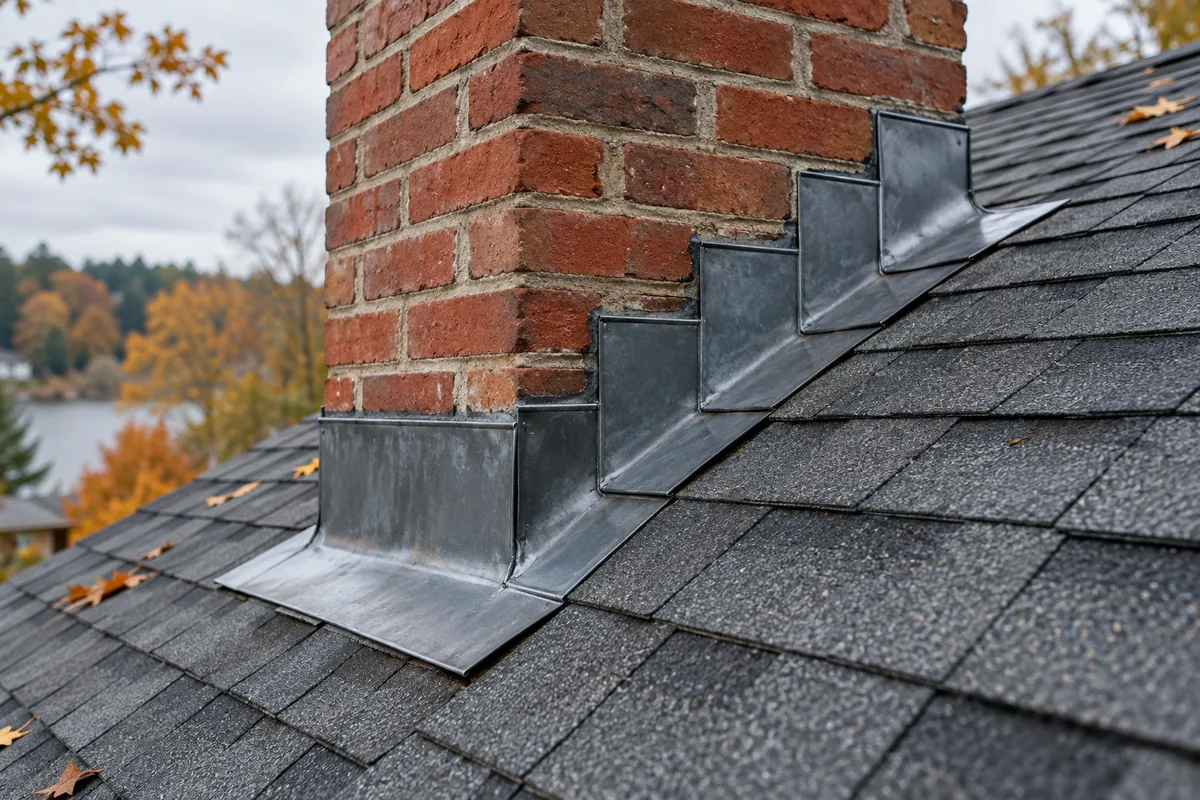
Why the junction matters
Roofing meets different materials at a chimney, sidewall, vent or skylight. Those connections need to shed water while accommodating the way the assembly is built. A line of sealant on the surface does not reveal whether the underlying arrangement is sound.
Describe where the stain sits in relation to the nearest wall or opening. Say whether the problem occurs during wind-driven rain, melting snow or ordinary rainfall, without assuming that timing proves the cause.
Questions about the proposed flashing work
Which connection is involved?
Ask the provider to identify the affected detail and show why it is suspected. Chimney counterflashing, step flashing and a vent boot are different components, even if all are described casually as a flashing leak.
What needs to be opened?
Ask whether shingles, siding, masonry interfaces or another covering must be accessed, and how the completed work will tie back into those materials.
Is the work temporary or intended to last?
Clarify the purpose of any sealant or patch and the follow-up plan. A temporary measure should not be mistaken for a fully assessed permanent scope.
A stain beside the chimney is a clue, not a verdict
Water may travel before it appears indoors. Masonry, the chimney assembly, adjacent roofing and interior condensation can complicate the picture. Ask which possibilities the provider checked and whether another trade needs to assess a separate issue.
Read what to ask after a patch fails if the same junction has already received repeated surface work.
Compare the details in writing
Request the repair location, materials, access requirements and proposed method in the written scope. Ask about adjacent damage, removal of old materials, cleanup and the process if concealed conditions require extra work.
Photographs can help you understand the finding without going onto the roof yourself. Save the assessment and completion record alongside earlier invoices. The cost guide explains why two proposals for a flashing concern can cover different work.
Make the call specific
Have the Bethlehem address ready and say which part of the home is affected. For water around an overhead window, see skylight leak repair. For a lifted roof covering, see shingle roof leak repair.
We provide referrals, not a remote diagnosis. An independent provider must confirm assessment, scheduling and terms.
Questions homeowners ask
Clear answers before the callWhat is step flashing?
It is flashing used where a sloping roof meets a sidewall. Ask the provider to explain the actual junction on your house and how the roof covering and wall assembly work together there.
Does flashing repair mean adding sealant?
Not necessarily. The required work depends on the detail and its condition. Ask whether materials need to be opened, repaired or replaced and what role sealant plays.
Can chimney water come from somewhere other than flashing?
Yes. The chimney assembly or nearby roofing may also be involved. Ask what was assessed and whether a separate chimney or masonry specialist is needed.
Why does a flashing concern return after patching?
The earlier work may not have addressed every entry point or surrounding condition. Compare the original scope with the new findings rather than assuming a cause remotely.
Does the ceiling stain identify the exact repair location?
No. Water can move along the assembly before showing inside. The provider should explain the evidence linking the roof finding with the symptom.
Can I book a guaranteed same-day flashing repair?
This website does not guarantee appointments or dispatch a crew. Call to discuss the situation and ask an independent provider about availability.