
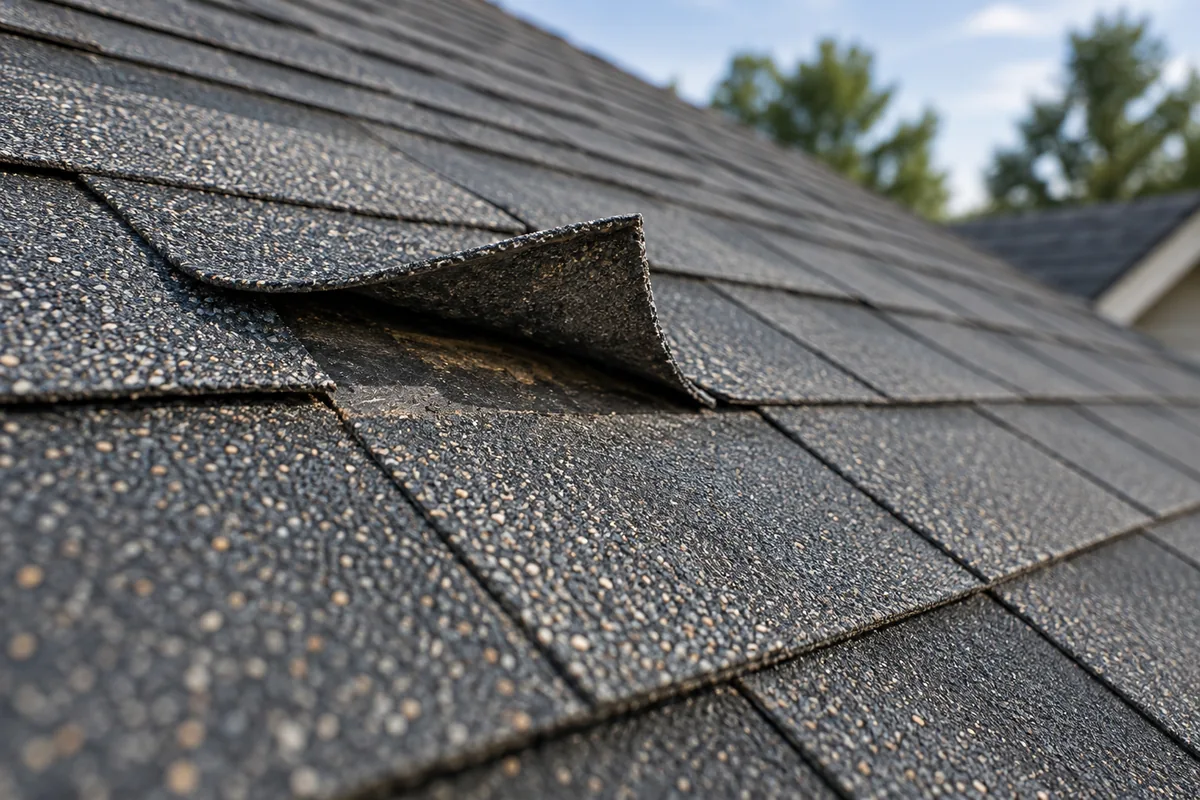
Describe more than the missing piece
Say where you noticed damage from the ground and where moisture appeared indoors. Mention a dormer, valley, wall or roof opening nearby. A missing shingle can be relevant without being the only fault, particularly when water enters above a junction and travels before it drips.
Do not climb up to lift shingles or pull out a loose piece. Record what you can see safely and let the independent provider decide how to inspect the roof.
What a targeted shingle repair should explain
The cause of entry
Ask what evidence connects the damaged area with the leak. The answer may involve a shingle, a fastener, flashing or a different layer underneath.
The boundary of the repair
Ask how much roofing needs to be opened and how new materials will join the existing assembly. Sound-looking shingles can still be too brittle to lift without damage.
The surrounding condition
A useful assessment considers more than the most obvious defect. Ask what adjacent wear, wet decking or earlier patches could change the recommendation.
Repairing an area versus replacing a roof
An isolated repair and a full replacement solve different problems. Ask the provider to show the findings behind either recommendation. The number of ceiling stains alone does not measure the amount of roof damage, and roof age alone does not describe the condition of every component.
Our repair-versus-replacement guide explains the questions worth asking before choosing a larger scope.
Appearance and hidden findings
Replacement shingles may not blend perfectly with a weathered roof. Ask about available matches, the visible repair boundary and whether matching changes the proposal. Also ask what happens if opening the roof reveals softened decking or damp material beyond the original area.
A written scope should distinguish the roof repair from attic drying, insulation, ceiling finishes or other interior work. Use the repair-cost guide to compare those inclusions.
Choose the related service when the symptom points elsewhere
Water near a chimney or wall may warrant a flashing assessment. A new opening after wind may require a storm-damage discussion, with temporary protection considered separately.
Call with the Bethlehem property address, roof type if known and active-leak status. The provider confirms service fit and availability.
Questions homeowners ask
Clear answers before the callDoes replacing one missing shingle always stop the leak?
No. The provider needs to establish whether that defect caused the water entry and whether another junction or underlying layer is affected.
Can shingles be repaired around a dormer?
Ask about both the roof covering and its connection to the dormer walls. A repair may need to address flashing rather than only the visible shingle surface.
Will new shingles match an older roof?
A close match may be possible, but weathering and product availability can limit it. Ask what the repair is likely to look like before agreeing.
What if the decking is damaged underneath?
Ask how concealed damage will be documented, how the scope could change and whether approval is required before additional work proceeds.
Should I save a shingle found in the garden?
If you can do so safely, keep it and note when and where it was found. Do not climb onto the roof to collect samples.
Who decides whether replacement is necessary?
The independent provider explains the on-site findings and options. Ask for the reasoning and a written proposal; the hiring decision remains yours.