
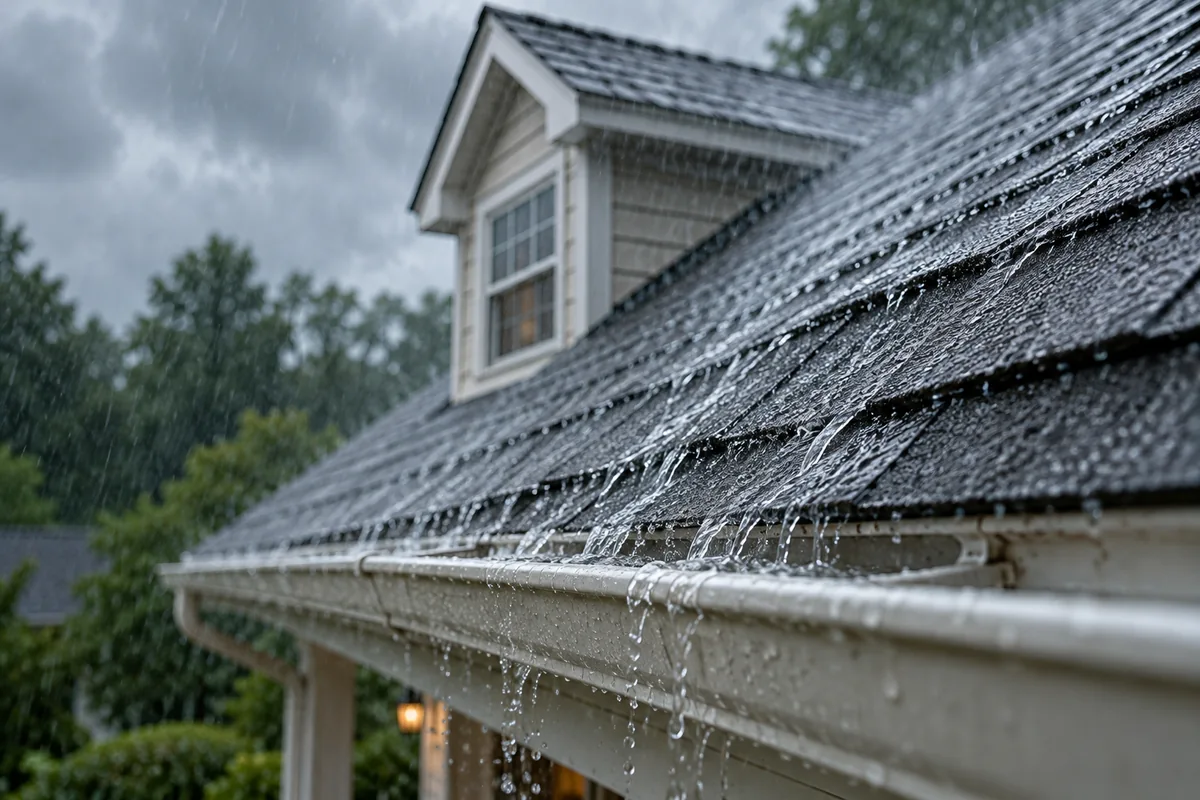
The pattern is useful even before the cause is known
Perhaps the stain stays quiet for weeks, then grows during a long downpour. Or the drip appears only when wind blows against one side of the house. Record that pattern in ordinary words. It can help a provider decide what needs investigation, but it is not a diagnosis by itself.
A roof junction, drainage detail, penetration or covering condition may behave differently under different weather. Water may also take time to reach the finish you can see. Avoid treating the first nearby roof feature as the proven fault.
Rainfall and wind can change what becomes visible
A heavier flow of water
A stronger or longer storm may expose a condition that is not apparent during a brief shower. Ask which roof paths and drainage details are relevant to the affected area.
A different direction
Wind can change how rain reaches a wall, dormer, skylight or another junction. Mention whether the symptom seems tied to one direction without assuming that identifies the entry.
A delayed indoor symptom
The ceiling may not show water at the moment it enters. Tell the provider if the stain appears during the rain, afterward or only once materials have stayed wet for some time.
Make a small weather-and-symptom log
- Record the date and approximate time the rain and visible symptom began.
- Note whether water was dripping or only a stain became damp.
- Identify the room, corner, wall or skylight where it appeared.
- Write whether the rain was wind-driven, prolonged or unusually heavy.
- Keep safe indoor or ground-level photos and earlier repair records.
- Say when the symptom stopped, without treating that as a repair.
A simple log over the events you have already observed is enough. Do not wait through more storms merely to collect a larger sample before asking about assessment.
The ceiling mark may not sit below the opening
Water can follow the roof assembly and framing before reaching an interior finish. A stain near a wall or overhead window is a useful location reference, not proof that the visible feature is faulty.
Ask the provider how it will connect indoor evidence with possible entry points. The relevant service may involve flashing, a skylight junction or the shingle covering. The assessment should determine that distinction.
What to ask when the inspection day is dry
Share your photos and timeline rather than trying to recreate the conditions yourself. Ask what can be assessed now, what remains uncertain and whether a further diagnostic step is needed. If controlled testing is proposed, ask the provider to explain its purpose and scope.
Do not hose the roof, remove finishes or add sealant to force an answer before the visit. Preserve the evidence you already have and let the provider explain a suitable investigation.
An active leak needs a safety and protection plan
Keep clear of a bulging ceiling, wet electrical fitting or unstable area. If there is immediate danger, obtain appropriate emergency assistance. Do not climb onto a wet roof to clear a suspected blockage or install a tarp.
Ask an independent provider about temporary protection if an opening is exposed. Clarify suitability, limitations, availability and who will return for a lasting assessment.
Compare the proposed repair with the pattern
Ask which finding explains the heavy-rain-only behavior and how the proposed scope addresses it. If the recommendation is simply more sealant on an earlier patch, ask what new evidence supports that choice and what surrounding details were assessed.
The returning-leak guide helps compare earlier work with a new assessment. A repair should have a clear explanation, not only a location that happens to be near the stain.
Keep the next step practical
Call with the Bethlehem address, active-leak status and a short description of the pattern. You do not need a technical name for the roof detail. Ask about the provider’s assessment, charge and availability before booking.
For broader homeowner background, see GAF’s homeowner roof-leak information. Its general information does not identify the condition at your property or replace the provider’s assessment.
Questions homeowners ask
Clear answers before the callWhy does my roof leak in heavy rain but not light rain?
Different water flow, wind direction or time spent wet can expose a condition that a smaller shower does not reveal. The pattern helps an assessment but does not prove a cause.
Does the leak stopping mean the roof fixed itself?
No. The rain or visible moisture may have stopped while the entry point remains. Record the event and ask about assessment.
Should I wait for another storm before calling?
No. Share the evidence already available. A provider can explain what it can assess and whether further diagnosis is needed.
Can wind-driven rain cause a different pattern?
It can change how water reaches roof and wall junctions. Describe the observed direction and timing without treating them as a remote diagnosis.
How do I stop a leaking roof during heavy rain?
Stay off the roof and away from unstable ceilings and wet electrics. Ask a provider about suitable temporary protection; obtain emergency assistance if there is immediate danger.
What if no fault is visible on a dry inspection day?
Ask what was assessed, what remains uncertain and what further diagnostic process is proposed. Your photos and timing record can help frame that discussion.