
The same room does not prove the same entry point
A familiar stain can make the new event look identical to the old one. Water paths can overlap, however, and an interior mark may reflect an unresolved entry, another defect or moisture in materials that still needs assessment. A website cannot distinguish those possibilities from the stain alone.
Note whether the mark became actively wet again, whether a new area appeared and what weather accompanied it. Keep the earlier photos so the provider can compare locations rather than relying only on memory.
Find out what the earlier patch was intended to do
Temporary protection
The first work may have been intended only to limit exposure until a fuller assessment or repair. Check the written scope and the agreed follow-up.
A defined permanent repair
Ask which defect was identified, what materials were changed and how the work joined the surrounding assembly.
A limited assessment
Some areas may not have been accessible or visible. Review what remained uncertain rather than assuming the first visit assessed every possible source.
Gather the record before the next call
- The original proposal, invoice and any assessment or completion photos.
- The dates of the first symptom, earlier work and new water entry.
- The room and exact visible location of the latest symptom.
- Whether the new event followed heavy rain, wind, snowmelt or another circumstance.
- Any written workmanship, follow-up or notification terms supplied by the provider.
- Changes to the roof, skylight or nearby work since the original repair.
Use the original provider’s stated contact process if you want it to review its work. Do not assume what a warranty or follow-up promise covers without reading the terms.
Questions for a reassessment
Ask whether the proposed investigation will revisit the original repair, check its boundaries and consider other roof details that could feed the same water path. Ask what evidence supports a different diagnosis if the explanation has changed.
Useful questions include: What was fixed last time? What is different now? Which adjacent materials were assessed? What remains uncertain? A clear answer should distinguish an observation from a possibility and explain how the next scope addresses the current finding.
Repeated surface work needs an explanation
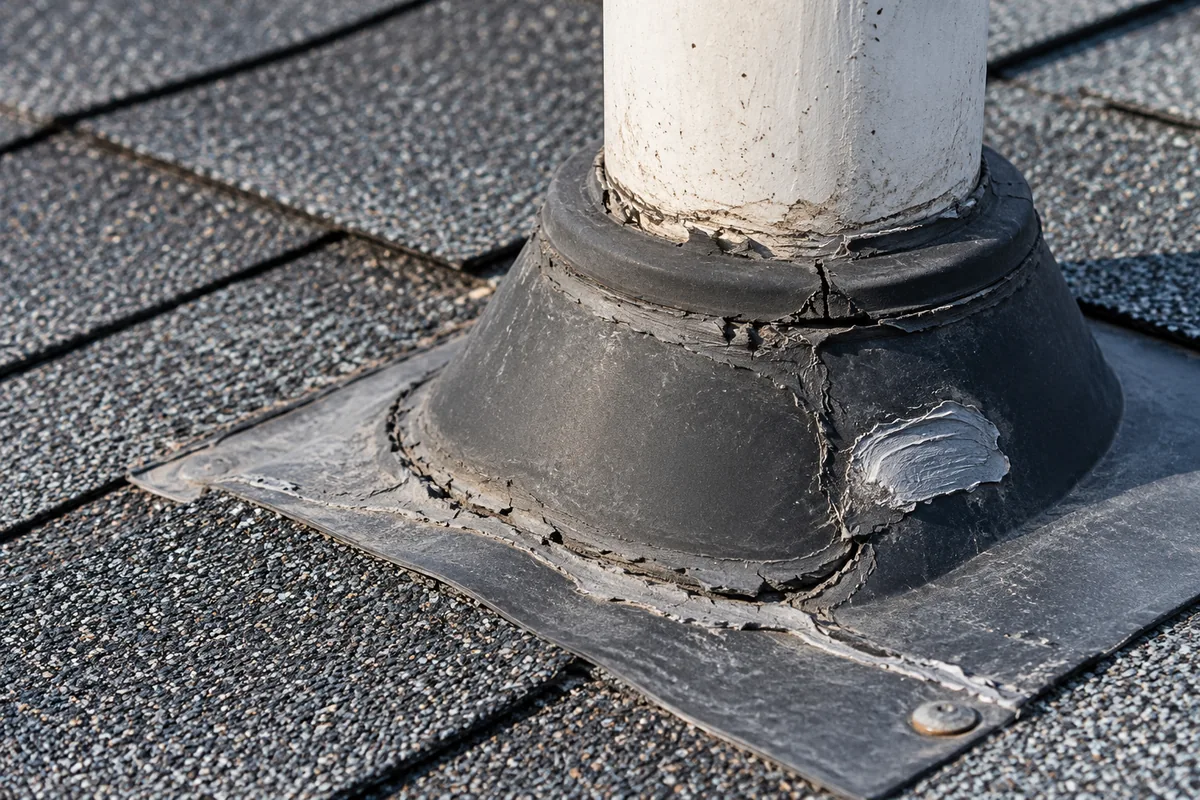
More sealant may look reassuring from the ground, but appearance alone does not show how a roof connection is arranged underneath. Ask whether opening a detail or replacing affected materials is needed and why the proposed approach suits the actual condition.
See roof flashing repair for chimney, wall or vent connections, or skylight assessment for water around an overhead window. Neither location should be treated as the proven cause without investigation.
If replacement is now recommended
A recurring leak does not automatically establish that a whole roof replacement is necessary. Ask which surrounding or widespread conditions limit a targeted repair and how the provider reached that conclusion.
Equally, do not assume another small patch is the best option simply because it appears less extensive. Our repair-or-replacement guide explains how to compare the reasoning, boundaries and limitations of the options.
Agree how the next work will be documented
Request a written scope showing the identified issue, the area to be opened, materials to be reinstated and the process for concealed findings. Ask how the completed work will be recorded and how to report a symptom afterward.
Roof entry, wet insulation and ceiling finishes are separate questions. Clarify which are included and which need other work. The cost guide helps compare proposals without assuming every “leak repair” includes the same items.
Deal with the active condition first
If water is entering now, explain that at the start of the call. Keep away from wet electrical equipment and unstable ceiling areas; use appropriate emergency assistance if people are in danger. Do not climb onto a wet roof to inspect the earlier patch.
For a weather-dependent pattern, read the heavy-rain guide. Ask an independent provider about assessment and any suitable temporary protection. Bethlehem RoofLeak does not judge the previous contractor’s work or guarantee the next repair.
Questions homeowners ask
Clear answers before the callWhy is my roof leaking again after a repair?
The original scope, repair boundary, another entry point or a different moisture source may need reassessment. Compare records and current findings before assuming a cause.
Does a returned leak mean I need a new roof?
Not automatically. Ask what surrounding or widespread condition makes repair unsuitable and what evidence supports the proposed scope.
Should I contact the original provider first?
Review its written follow-up terms and use its contact process if you want it to reassess the work. Keep dates, photos and communications.
Is another layer of sealant enough?
That depends on the actual detail and condition. Ask what was assessed, why that method is proposed and whether materials need opening or replacement.
Can an old stain remain after the roof repair?
A visible stain and new active moisture are different observations. Record whether the area becomes wet again and ask about any separate drying or finish work needed.
What should the next proposal include?
Ask for the identified issue, repair boundary, materials, hidden-damage process, exclusions, payment terms and how to report a symptom after completion.